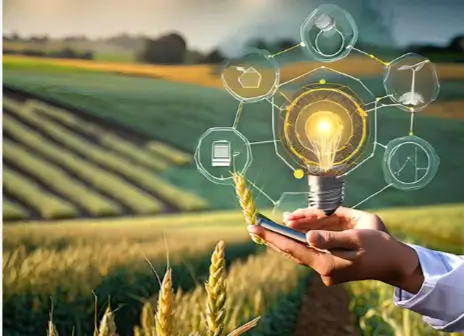
AI is reshaping farming through real-time sensing, predictive analytics, and autonomous systems. Multispectral data, sensor networks, and climate-informed models inform decisions from planting to harvest. Resource use is optimized, interventions are targeted, and maintenance becomes proactive. Data governance and reproducibility underlie trust across disciplines. Policymaking, economics, and agronomy converge to chart scalable pathways. Yet questions remain about implementation, equity, and resilience as farms migrate toward data-driven ecosystems. The next step will reveal how these systems balance risk and reward.
How AI Enables Smarter Farm Operations
By integrating machine learning, computer vision, and sensor networks, AI enables smarter farm operations through real-time monitoring, precise input application, and predictive maintenance. Data from diverse sources informs autonomous decision-making, optimizing resource use and labor allocation.
The approach emphasizes precision farming and data governance to ensure transparency, accountability, and reproducibility across platforms, fostering resilient, scalable agriculture worldwide with interdisciplinary collaboration and forward-looking standards.
What AI Powers for Crop Health and Yields
AI powers crop health and yields by integrating multispectral sensing, genomic and phenotypic data, and climate-informed models to detect stressors, optimize remediation, and forecast productivity.
The approach combines precision sensors with scalable analytics, enabling real-time monitoring and targeted interventions.
Insights into plant genetics guide breeding strategies and management choices, aligning interventions with resilient phenotypes and advancing data-driven, interdisciplinary decision-making for sustainable yields.
See also: mundoapprd
How AI Shapes Resource Management and Sustainability
Across farming systems, AI-driven resource management combines sensor networks, weather and soil data, and optimization algorithms to balance inputs with crop demand, reducing waste and environmental impact.
The approach analyzes water usage patterns, soil carbon dynamics, and evapotranspiration to guide autonomous irrigation, nutrient stewardship, and residue management.
This integrative framework supports resilient, transparent, data-informed farming for a sustainable future.
The Future on the Horizon: Adoption, Challenges, and Pathways
The horizon for AI-enabled farming blends empirical evidence with practical pathways, outlining how adoption, limitations, and governance will shape outcomes across scales.
This assessment synthesizes agronomy, data science, economics, and policy to map sequenced milestones, highlight barriers, and propose measurable targets.
Precision budgeting and risk forecasting anchor planning, enabling resilient adoption, equitable access, and responsible, scalable transformation across diverse farming systems.
Frequently Asked Questions
How Does AI Address Soil Biodiversity in Farming?
AI addresses soil biodiversity by analyzing soil microbiome data, guiding targeted practices that preserve microbial diversity and enhance nutrient cycling; interdisciplinary metrics forecast outcomes, enabling adaptable management for resilient, data-driven farming without restricting farmers’ freedom to experiment.
Can AI Predict Market Prices for Crops?
A compass in a storm, AI can predict market prices for crops. It employs AI driven price forecasting, Market volatility modeling, crop budgeting, risk assessment to illuminate uncertainties and guide strategic decisions with data-driven, interdisciplinary, forward-looking clarity for freedom-loving audiences.
What Are Ai’s Limits in Pest Resistance?
AI faces limits in pest resistance: data gaps, ecological complexity, and evolving pests constrain reliability. AI limitations include transferability across environments, requirement for high-quality labeled data, and potential overfitting, necessitating interdisciplinary validation and cautious, freedom-loving adoption.
How Secure Is Farm Data From AI Systems?
Data privacy and data ownership critically shape the security of farm data from AI systems, as multidisciplinary safeguards—encryption, access controls, governance, and transparent analytics—enable practitioners to pursue innovation with autonomy while mitigating risk and preserving farmer freedom.
Will AI Replace Human Farm Workers Soon?
AI will not instantly replace workers; instead, it reshapes roles. The AI workforce implications point to gradual transition, with automation augmenting tasks. Farm labor displacement may occur, but adaptive training and policy support can safeguard livelihoods.
Conclusion
AI-driven farming integrates real-time sensing, predictive analytics, and autonomous systems to optimize inputs, safeguard crops, and boost resilience. Interdisciplinary data streams—from agronomy to economics—inform transparent governance and reproducible models, enabling scalable precision agriculture. Resource use, climate risk, and yield outcomes become measurable, guiding smarter decisions and policy alignment. While adoption challenges persist, ongoing innovation and collaboration promise equitable gains. In short, the field is moving from insight to impact, turning data into sustainable harvests and resilient livelihoods.